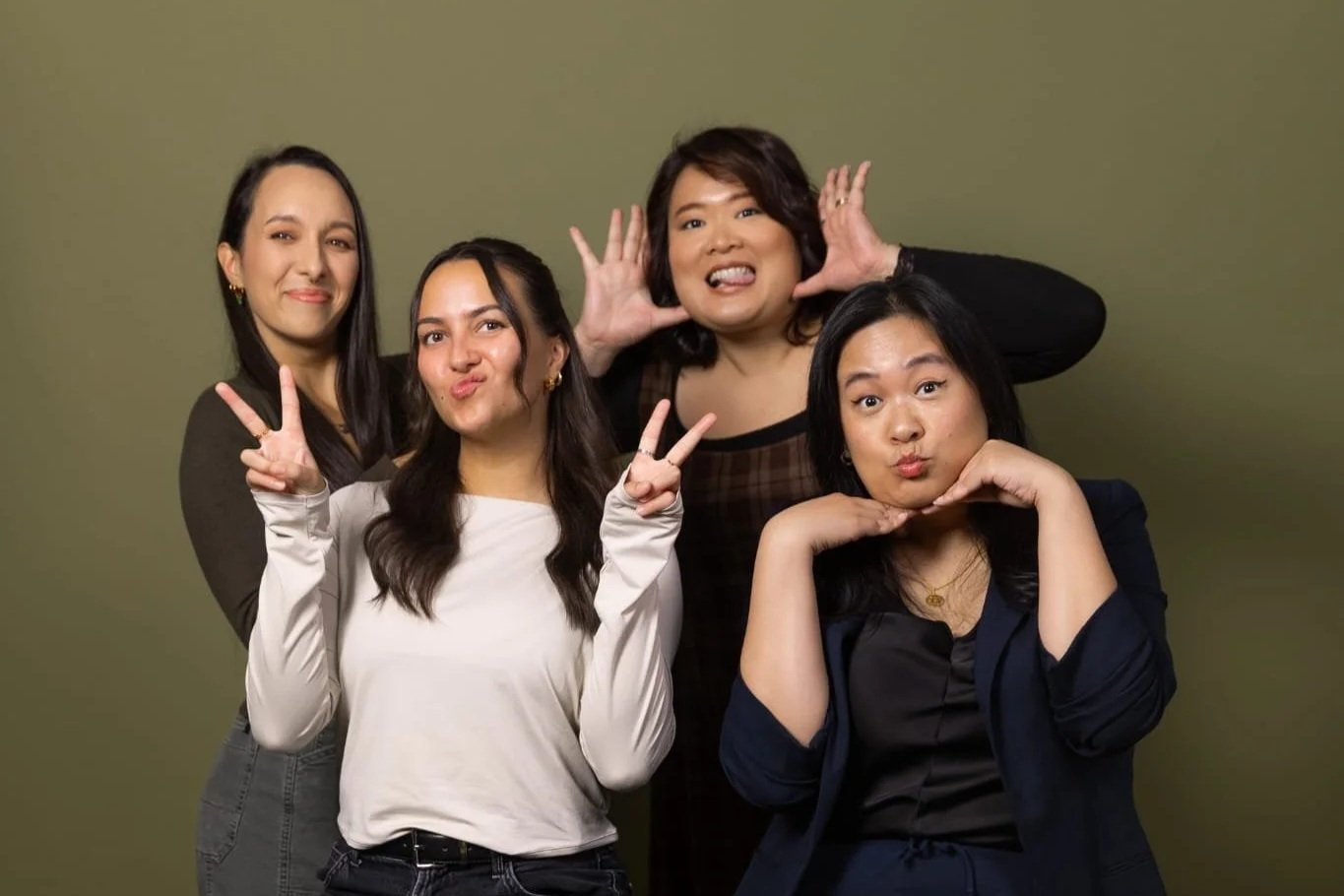
Meet Nathalie
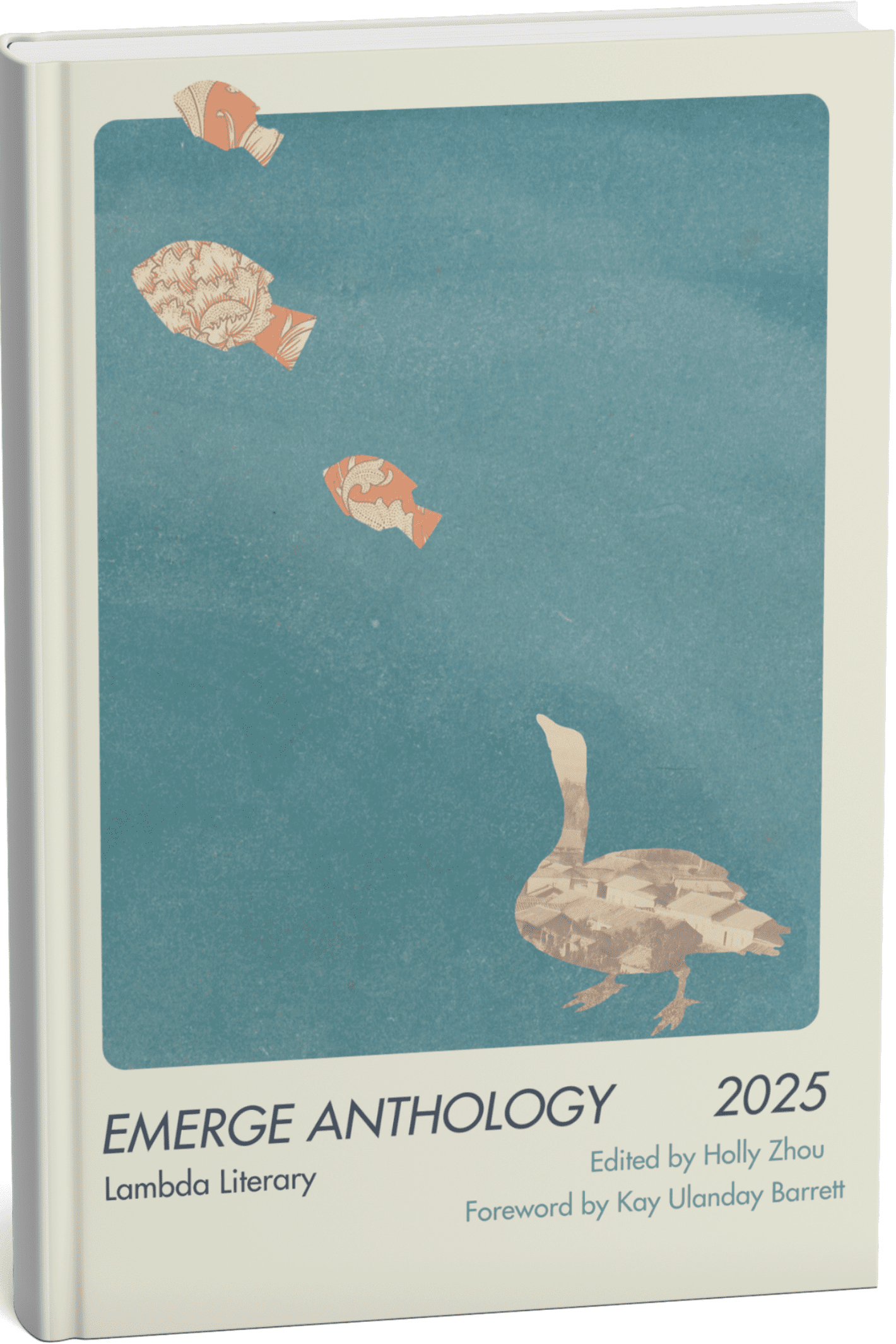
Nathalie De Los Santos (NAT-uh-lee dee lohs SAHN-tohs) (she/her/they/them) is a writer and creative. She created PilipinxPages, a platform that features Filipinx authors. She was a fellow of the 2025 Lambda Literary Retreat for Emerging LGBTQ Voices, where she workshopped her YA fantasy novel Diyosa Mata under the mentorship of Aiden Thomas. Her short story “Bakunawa and the Seven Sisters” was shortlisted by Fractured Lit's Ghost, Fable and Fairy Tales Prize (judged by Dan Chaon). She won Anvil Press’s 3-Day Novel Contest in 2024, and her winning novel, Debt of the Heart, is forthcoming from Anvil Press in Winter 2027.
Nathalie is one of the key organizers of the Filipino-Canadian Book Festival. Her work has appeared in Magdaragat: An Anthology of Filipino-Canadian Writing, The Globe and Mail, SAD Magazine, and more. She also hosts the Filipino Fairy Tales, Mythology, and Folklore podcast. Her current novel in progress, Bakunawa and the Seven Sisters, is supported by the Canada Council for the Arts and the BC Arts Council.
Books
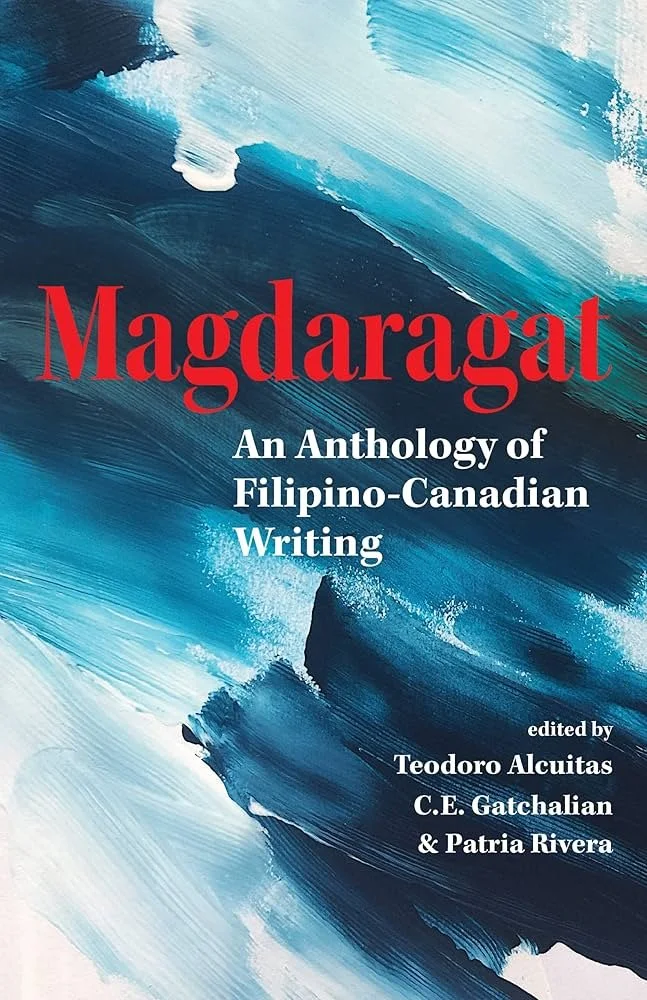
“There’s a long story by Nathalie de los Santos that alone may be worth the price of the book for its sweeping, multigenerational narrative of the immigrant experience from Bohol to New Brunswick, and from Filipino to Filipinx. The young Kay laments that “Even my relatives can be like this, they remind me how I’m not Filipino enough when I don’t know something about our culture. But then some people here believe I’m not Canadian just by looking at me. When I’m asked, ‘Where you from?’ it implies that. Who am I then?... But, maybe all of this is coming from the same place of hurt?”
-Butch Dalisay, in a Philippine Star Life review of Magdaragat: An Anthology of Filipino-Canadian Writing
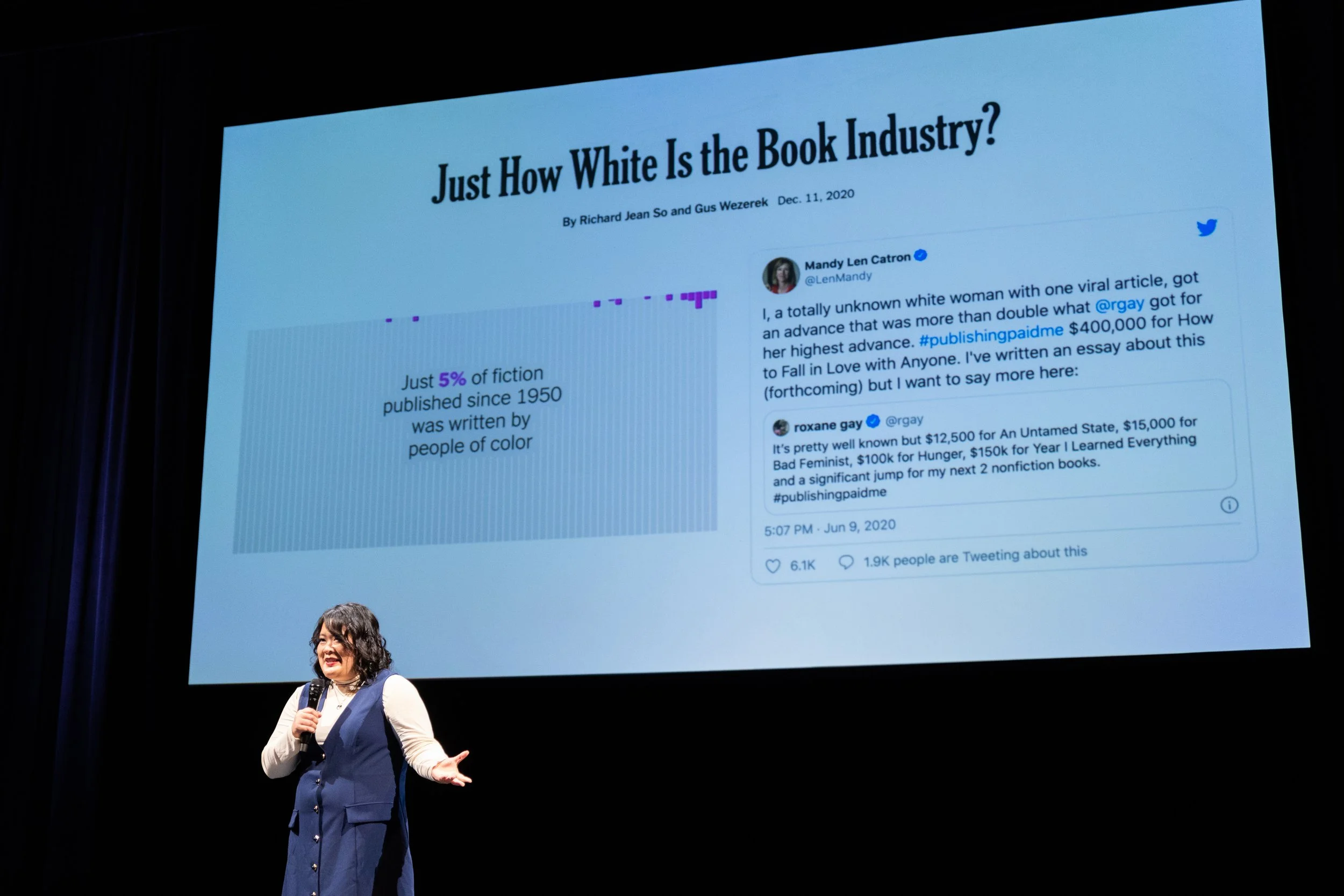
Listen to Nathalie speak about her work at PechaKucha May 2024.
Community Driven Work
I am one of the co-organizers of the inaugural Filipino-Canadian Book Festival.
Our mission is to celebrate Filipino and Canadian heritage and the unique culture that we are living and creating every day in our diaspora. We hope to honour our ancestral roots and artistic lineages, as well as build and grow revolutionary literary and artistic safe spaces for our kapwa.
We celebrated Filipino culture, and had a keynote by award-winning author, Catherine Hernandez; there were book signings and panel talks with Fil-Can authors; family-friendly workshops; open mic readings to showcase both emerging and established literary talent; musical entertainment; a marketplace & book fair for Filipino local businesses and our partners, and more that happened that wonderful weekend!
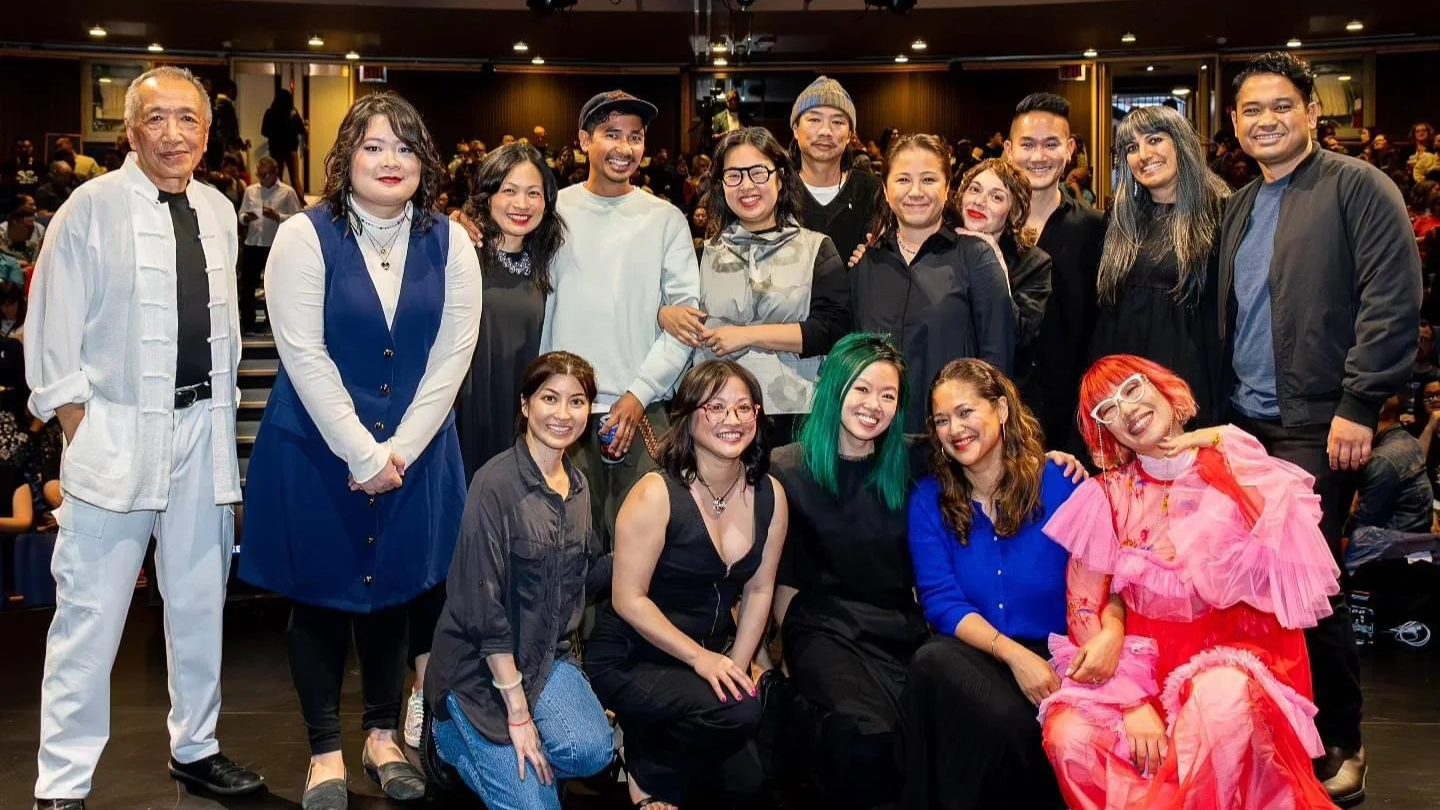
Speakers of PechaKucha May, 2024.

My Mission
Growing up in Canada in the 90s, I didn’t see myself or my family in many books, films and media. I grew up enjoying fantasy books and video games, and geek culture has been a large part of the make up of my imagination as a creative. My family was the first to teach me my culture. My dad taught me through his love of cooking and his random stories of aswang. My mother would call me a tik-tik (lovingly?) and tell me all her family sagas, which were my earliest impressions of Filipino culture. My sister and I have countless stories of growing up Filipino in Vancouver in the 90s, both joyful and questionable.
In 2008, I learnt about the Oka Crisis that happened in Canada. I had the rose coloured glasses of Canada being better than the United States, not fully understanding that our ongoing systemic racism has its own history. The Oka Crisis was a land dispute between a group of Mohawk people and the town of Oka, Quebec, Canada, over plans to build a golf course on land known as “The Pines” which included an indigenous burial ground. I was shocked to see the film Kanehsatake: 270 Years of Resistance while I was studying at Emily Carr University, and to see that most of the people the Canadian army displaced were women and children, and people simply fighting for their homes. The Oka Crisis happened in my lifetime, and this “racist Canada” was not something of the past. I wanted to do something to help advocate for communities where systems are designed to harm them. I started inward and started to ask myself: How did my family get here? How do I add to this narrative as a settler upon Canada? It led me to realizing my parents left the Philippines in the 60s-70s, partially influenced by martial law and the incentive to work abroad, that was during the Marcos era.
In 2020, when the pandemic hit, I found myself with a lot of time to reconnect with my roots, and so I started to read books by Filipino authors. I was also writing a Filipino fantasy novel, and started to collect resources around folklore and mythology. One of my first influences was Lane Wilcken, author of Filipino Tattoos: Ancient to Modern. Lane Wilcken has been researching the indigenous past of the Philippines and the Pacific Islands for nearly two decades, incorporating oral traditions, written history, linguistics, and personal experience. He also practices batok, offering ceremony to those who want to be tattooed. His book taught me a different way of thinking about folklore and mythology, to not see it as purely magical or something of the past, but something that contains ancient wisdom passed down through time.
For instance, in one of our creation stories, a kite bird is flying over the earth that does not have islands yet. It becomes tired and starts a quarrel between the sea and sky, so they start throwing rocks at each other and form the first islands. The bird finally can land on a piece of land, and as it does, a bamboo shoot hits its back foot. Irritated, the bird pecks at it, and when it breaks, out pops the first man and woman, Maganda and Malakas.
So this might seem “magical” or a story we cannot relate to in a modern day. However, in my research, it is pointed out that the kite bird was used by sailors during storms to find land. The sea and sky fighting is a reference to a storm.
Learning these stories took a lot of finding books that were often hard to source and find unless someone went to the Philippines. Some were available through online platforms. And most resources I needed translated into English. As I did this research, I realized a lot of our folklore is written by white academics, missionaries that came to the Philippines and collected our stories. I was once asked to write an introduction to a Philippine myths book, which only featured dead, white scholars because their work is in the public domain and this publisher could benefit from not having to pay anyone except for me. The editor of the book is also a white male and the press is based in the United Kingdom. My response was “I’ll write the introduction if you feature some Filipino voices” and I never heard back.
In 2021/22, I found a rare Filipino mythology book in my closet. My father kept it because he was friends with some of the creators, one of whom was my babysitter. Philippine Folklore Volume 2 was created by a group of Filipinos in the 90s in Vancouver, and was so grass roots it was funded by the Seniors Lottery Association. As I read through it, I realized that this was the first time a group of Filipino voices taught me these stories. This was a very much self-published book that is out of print, and I tried to find their descendants to see if anyone would be interested in republishing the work. Unfortunately that path led me to dead ends, and those who responded didn’t either know their parents or grandparents did this, or weren’t interested.
Had my father not kept this copy, it would have been lost to time. To this day, we remain under reviewed, under served and under published as a community. I decided at that point to rewrite and retell the stories that opened my heart and mind when I read this work, and create my podcast, Filipino Fairy Tales, Mythology and Folklore. I wanted to do it orally and offer this resource for free.
I acknowledge my research and retellings may not be perfect, and that there are many tellings of these stories as there are over 7,000 islands in the Philippines. But these were first my own attempts to reconnect to my folklore and make sense of my world. If I’ve done something inaccurate, I apologize. Our colonizers told our ancestors our beliefs were backwards and broken, and so I never had elders teach me their wisdom, until I found that book in my dad’s closet. We are becoming the next generation of storytellers for those after us, and I hope my work makes you curious and excited to tell your own versions of your story.
With so much love,
Nathalie De Los Santos