Blog
Why Some Mangoes are Sour
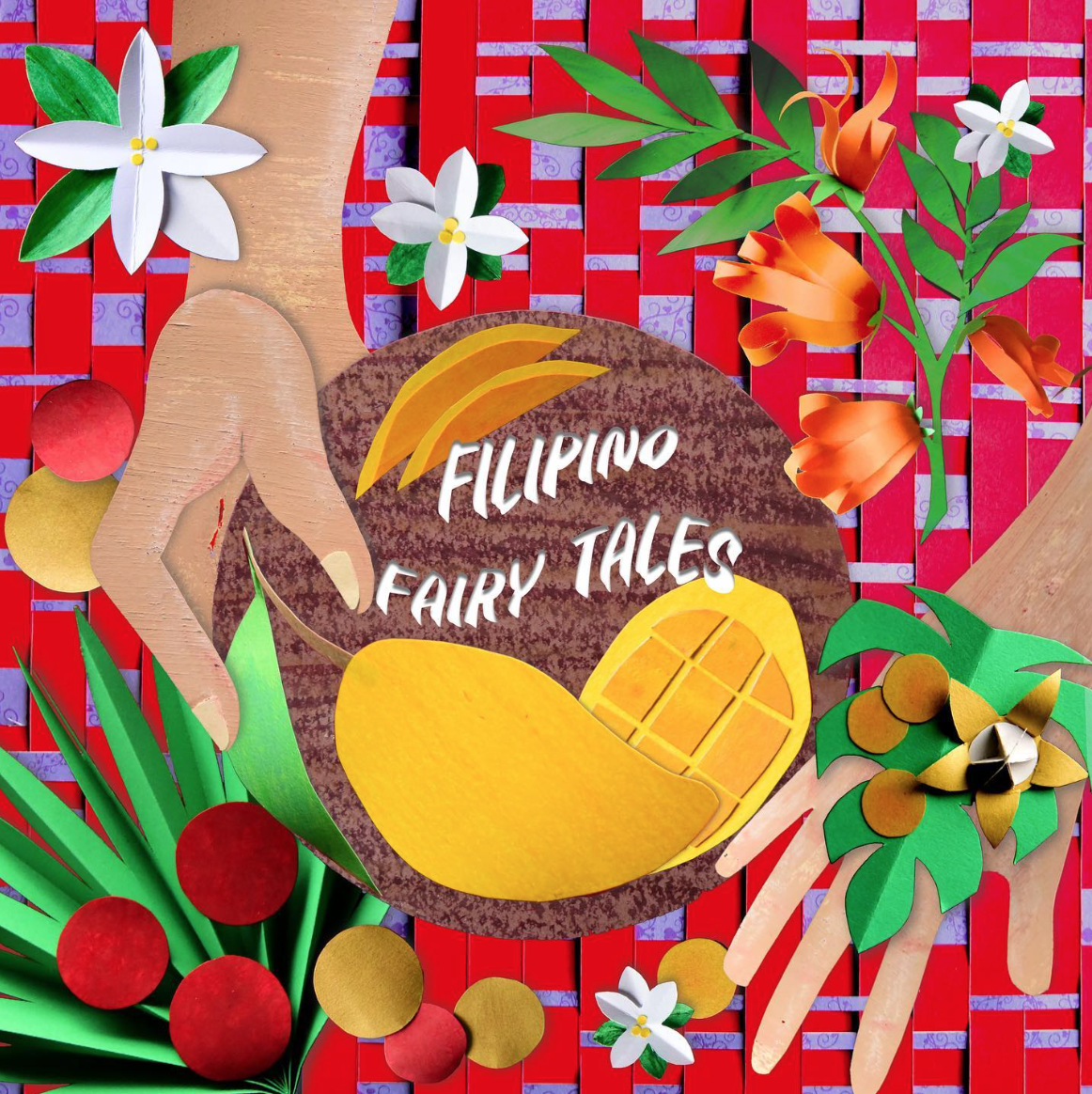
Why Some Mangoes are Sour is the Filipino folktale and myth of Tita and Nita, and why mangos are either sweet or sour. Tita is a demanding girl, while her sister Nita is diplomatic and kind. This tale is from Pangasinan.
Once upon a time, there were two sisters named Tita and Nita. They were very different from each other. Tita was the elder, and she was spoiled. Being the first child, she received many gifts and everything she asked for from her parents. She was vain, proud, selfish and quarrelsome. No one liked Tita in the barrio.
Nita, the younger daughter, was kind, helpful, humble, modest and friendly to everyone. She was kind to both the rich and poor, while her sister Tita wrinkled her nose up at the beggar and told him to get a job.
The two lived in a large farm in the village, and had many mango trees. Tita loved eating the fruit, so that is why her parents planted them. Unfortunately, ill fate struck their family and their parents died. Tita and Nita both grieved their parents, and in turn healed differently from each other. Tita was a realist and wanted to protect her family from harm, so she would never lose her sister. Nita was an optimist and wanted to help others, so in turn, they would receive help. This was important to Nita because she didn’t want her and Tita to suffer. The differences in their personalities and grief journey caused a crack between the two sisters.
One day, an old woman came to visit their farm. Nita answered the door and the old woman asked for food. Nita gave her some mangoes to eat and invited her in for dinner. Upon entering the home, Tita shouted at Nita to get the old beggar out of there because she might steal something.
The old woman turned out to be a deity in disguise. As a reward to Nita, she said that any mango that Nita would touch would be sweet. And any mango that Tita touched would be sour.
Since then, the fruits of all mango trees have had two tastes: some are sweet, some are sour.
The Legend of the Lanzones Fruit
Learn about yummy lanzones and the ancient Filipino folktale and myth behind the fruit!
Lanzones is a delicious fruit, that kind of is like eating a grapefruit. It is as known as langsat, duku or dokong. Lansium parasiticum is a species of tree in the Mahogany family. The species is native to Southeast Asia.
A long time ago, the fruit was known as poisonous. The story goes that there was an old beggar who was wandering a town. He was tired, weary from his hungry and exertion. He went into the shade of a tree and slept for a moment. He saw the lanzones above and ate some, and not long after, he threw up and died. That is why people avoided the fruit.
Years later, an otherworldly woman came to the village and danced around joyfully. She was beautiful, but her face was a little too long, her eyes too wide, her canine teeth a little too sharp. The villagers thought she was a nymph from the streams, or a fairy from their sun god.
She picked some of the fruit and the villagers expected her to die as soon as she ate them. She pinched the fruit with her fingers and started to eat away. She did not die and kept eating handfuls of the fruit. The villagers joined in with her and started to eat the fruit. The fruit was sweet and refreshing and they immediately loved it. To this day, the fairy’s pinch marks were left on the fruit and lazones is a well-liked fruit across the Philippines.
The Legend of the Ilang Ilang
The Legend of the Ilang Ilang describes the origin of the ilang ilang flower. A rajah falls in love with a girl who serves the supreme god, Bathala.
Once upon a time, a couple lived near the foot of a mountain. As days and years passed, they could not have a child. They prayed to all their deities for a child, and one day Bathala, the supreme god, heard their call.
In the form of a handsome young man, Bathala said “You will have a daughter. But when she grows up, do not allow her to fall in love with any man. She will serve Bathala and the other deities.”
The couple thanked the man and replied, “Yes sir, we will not forget what you said.”
Not long afterwards, they had a baby girl as the young man said. They named her Ilang (ee-lang). She grew up into a radiant and lovely woman. Her beauty become known not only in their town but other places far and wide. The young datus and rajahs of far-away kingdoms heard of her beauty and desired her hand in marriage.
A stranger came to their town one day. It was Rajah Marahas, who came from a distant barangay. He had seen her once before and vowed to win her love. He tried to find where Ilang lived. He came to a large window of a home, and he saw her combing her long, black hair. He watched her, deep in admiration, before he realized he had to do something.
He tore off a wide banana leaf and wrote the following on it: “I am Rajah Marahas. Can I speak with you?” He then wrapped the leaf around a small stone and threw it through the girl’s open window.
Ilang was surprised and looked out of the window. Outside was a handsome stranger, and she smiled as the young man waved, then bowed his head to her.
He came back every night, though they did not speak to each other. He would gaze upon her window and at her because it was enough for the two to look at each other. Though his heart longed for more. He climbed into the window, and Ilang let out a scream. He covered her mouth and said, “I love you, Ilang. I know you love me too.” He was confused by her shaking her head, the tears that rolled out of her wide eyes. Unbeknownst to him, Ilang heard Bathala’s voice. The god knew that in Ilang’s heart, she had broken his rules.
Ilang vanished in Marahas’ arms. He called to her and panic enveloped him. But he then felt a cold wind touch his face, and a strong floral fragrance filled his nostrils. It made him think of Ilang. He saw a small plant growing into a tree, and flowers began to bloom on the tree that grew before his eyes. The flowers smelled the same as the cold wind’s scent.
He brought the tree back to his kingdom. He never married for he knew Ilang was with him when the flowers bloomed. He named the flowers ilang-ilang.

The Legend of the Sampaguita Flower
Read the Filipino folktale and myth, The Legend of the Sampaguita Flower.
A long time ago, there lived a datu and daughter, Liwayway. His daughter loved picking flowers every day. One morning, Liwayway was distracted by the beauty of the jungles. She had wandered close to the neighboring village. The son of the datu of that neighboring village Lakang was out deer hunting on that same morning. Time stopped when the two met each other’s eyes. Liwayway had a bundle of flowers in her arms, the chirp of maya birds filled the air and Lakang strode towards her to introduce himself. Every day they visited each other. When their parents found out, they urged the two to marry.
But they had to postpone the wedding because Spanish conquistadors came to Lakang’s village. Bravely Lakang lead the troops against the invaders. Lakang and his men glided upon the seas in their boats, but the conquistadors came in ships that were like wooden castles. Their cannons killed Lakang and his men.
Liwayway waited faithfully for him, not knowing that Lakang had perished at sea. Every morning, she went to the woods where she first laid eyes on him. Months passed, then those months turned to years. In her sorrow, Liwayway fell ill and soon passed. They buried her body where her and Lakang would meet every morning. After a few days, a small plant bearing small white and fragrant flowers sprang from where Liwayway was buried.
From the flowers Liwayway left behind, it became practice for suitors to offer a garland of Liwayway’s flowers to their loves. If the girl wears the garland, she has accepted her sweetheart. The couple promise to be faithful. With hands joined, they say “Sumpa kita.”
One day a foreigner saw the flowers and asked what the name of the flowers were. A villager answered “sumpa kita”. The foreigner tried to repeat the word but twisted its name, so now the flower is known as “sampaguita”.

The Origin of Bananas
Read the Filipino folktale and myth, the Origin of Bananas.
Once upon a time in Lanao, there was a prosperous kingdom, and its sight of scenery was something to behold – green fields, clear streams and blue hills. A great Datu ruled the kingdom, and she was kind-hearted, wise and brave that everyone did everything in their ability to make her happy in this beautiful kingdom.
There was enough food, the towns were clean, homes were neat, and there were no cockpits or gambling houses, for the men worked on the farms all day. The children were good, that there were no whips. Teachers did not have to think of how to get the children to learn and listen, but what lessons to teach them instead.
But the wicked cousin of the Datu desired her seat on the throne. So she schemed to find a way to dethrone the kind Datu.
Many suitors came for the Datu, but her response was always the same: “If I take one of you, the others will be angry. There will be war. I would rather remain single and have peace in my kingdom.”
The wicked cousin of the princess loved one of her suitors. So she schemed a plan. She told him, “The Datu loves you, but she cannot accept your love for her fear. Bring your army, slay your rivals and the Datu’s guards. Enter the city, and the Datu and the kingdom will be yours.” He listened to her and prepared his men to strike.
A magical bird, the Nori, overheard this terrible plan. She flew to the Datu and told the Datu what she heard, and finished with the warning, “Your cousin wants your crown and will not rest until she’s slain you and has this suitor for herself.”
The Datu’s heart was heavy with sorrow, and wept bitterly but showed her grief to no one. At night, she told her guard and servants to go outside of her nipa hut and leave her inside. They thought it was strange, but they trusted her and obeyed.
When they were gone, the Datu barricaded the hut with whatever could block the entrances and windows she could find. When she was done, she set her hut on fire. The fire quickly spread to other rooms. The people saw the flames and tried to rush in and put out the fire. But it was too late – the Datu perished in the flames of the hut.
The people mourned deeply over the death of their Datu, and built a lovely fence around her ashes. “We must honor her, who loved us so well,” they said.
One day, a strange plant appeared on the pile of ashes. It had long, wide leaves and a straight white trunk. A great tree grew in its place and a red, heart-shaped flower came out of its bosom.
“It is our queen, she’s come to life again.” The people said to one another.
The slender fruit that came out of the flower to be known as the banana. The people loved the banana as much as they loved their queen. It is said that the Gods turned the Datu’s wicked cousin into a monkey, so that is why monkeys covet the banana so much.

The Legend of Mount Kanlaon
The Legend of Mount Kanlaon is a fairy tale that has everything - a dragon, a hero, and animals! Read it here.
The valleys of Negros were once green and filled with happy people. Until one day, a dragon appeared on the mountain of the island. The dragon had yellow eyes and upon its back were ghastly spines, its face had sixteen nostrils and the scales of the dragon were caked in hot carbon char. From its seven cavernous mouths, it breathed deadly fire.
The dragon would burn the crops, whole towns and kill many in its wake. The people feared the dragon, so they tried to find something to appease the dragon.
Eventually, they discovered that if a beautiful woman was offered to the dragon, it would not become violent for a whole year. At the beginning of each year, the leaders would choose the fairest maiden in Negros. They dressed her in black and took her to the slopes of the mountain. They would do a ceremony to offer her to the dragon, and she was left there alone. No one would hear from the offered maiden after this. Everyone knew without saying that she would be devoured by this horrible dragon and peace would follow for twelve months.
This went on year after year. But every father had learned to make ugly marks on their baby girls, so they would not have to offer her to the dragon. Soon, no beautiful maiden could be found to appease the dragon.
Eventually, only the king’s daughter remained. She was lovely like the radiant sun, sweet like the song of the coleto, and wise like ancient ones herself. No one had the heart to give her an ugly mark. And with no other maiden in the realm, she would become the one for the dragon to devour.
Bursts of smoke and flame started to descend upon the mountain, so the king cried out, “What shall we do?”
Just as the princess dressed herself in black to offer herself to the dark dragon, a handsome young prince from India appeared. He spoke to the king, “I’ve heard about the troubles of your kingdom and I want to help you all.”
“Slay the dragon or even drive it away, and you shall be rewarded with all the gold you can carry and my daughter shall be yours,” the king offered.
The stranger left silently. He climbed the slopes of the mountain with no fear. Unbeknownst to the people, this stranger was the great god Laon. He was skilled in talking with creatures of the earth. He spoke to the ants, bees, and eagles to speak with their king and told them to bring all their people to the top of the mountain.
Meanwhile as the animals did this, a great eagle allowed Laon to ride upon his back to the mountain top. At the top of the mountain, they descended into a great caldera. Within it the earth moved. Laon realized the movement was the great dragon. As soon as the dragon saw him, he began to spew flame and smoke billowed from the mountain. Laon landed before the great beast and held up his sword.
The people grew alarmed at the sight of the mountain, upset that Laon had caused the dragon to be wrathful. The princess fretted and moaned to herself, “He will get killed, he will get killed!”
The monster moved towards Laon, but he was ready, and he moved further back, outside of what he had hoped was striking reach. In a few short seconds, the dragon found him and coiled itself for its strike. Laon let the fear of being prey wash over him. Laon could almost see the energy, burning in him and in the plants around him—in everything except the monster.
The dragon struck the earth, just where he had been standing, and Laon fell back, unharmed. Laon touched at the earth, and ants erupted from their nests in the decaying earth beneath, clicking in an angry swarm, covering the serpent. The ants distracted the dragon enough for him to get close. The dragon thrashed wildly from the ants biting on its skin. At the same time, the bees had arrived and started to sting the several eyes of the dragon, blinding him. In a burst of wings and powerful calls, the eagles appeared to tear the eyes right out of the monster.
Blind and clawing at air, Laon cut each terrible head of the dragon off. As soon as he took the biggest head off, the cursed creature exploded in a storm of ash. Laon returned to the kingdom with the head of the dragon. Rejoiced, the people named the mountain Khan Laon, which means Lord Laon.
The Princess and Khan Laon married and became the ancestors of the people of Negros.

The Coleto and the Crow
Read the Filipino fairy tale, the Coleto and the Crow for its healthy dose of competition! Who doesn't like a good race fairy tale?!
Art by nikbuens.art
A long, long time ago, the crow was a white bird. The coleto was black as he is today, and he wore a crown of feathers ontop of his head.
One day the crow was practicing his call, “Caw – caw – caw!”
The coleto came over and taunted in his sing song voice, “If you were in a contest for singing notes out of tune, you would win.”
Irritated, the crow responded with “You are so tiny, by the time you realize it was raining, you would have drowned.”
The coleto responded hotly: “It’s true I’m tiny, but I can fly higher than other bird! I can outfly the eagle himself!”
“Sure you can, I could beat you with my eyes closed. I’ll race you.” the crow taunted.
The coleto puffed his chest, “You should learn how to pluck your feathers, suck in more air and learn how to sing before you challenge me to a race.”
The crow cawed in his rough voice back: “Sounds like you’re trying to get out of this.”
With a flourish of his wing, the coleto accepted: “Fine! This race starts now!”
The coleto counted to three and the two began their ascent. Up, up, up, they soared in the sky, circled each other and onlookers admired the beauty of their wings spread out, gleaming in the sun. Soon they lost sight of each other in a dark cloud and flew on separately.
The coleto knocked his head against the floor of the sky, and the crown of feathers on his head was shaved off. The crow flew too close to the sun that his white feathers were burnt black.
Frightened, they descended back to earth and forgot their challenge to each other. To this day, the coleto has no feathers on top of his head, and the crow’s feathers are completely black.
Why Dogs Wag Their Tails
Read the Filipino fairy tale, Why Dogs Wag their Tails! Rewritten and performed by: Nathalie De Los Santos. This story appears in Mabel Cook Cole's Philippine Folk Tales. Another version exists as "Why Dogs Bare Their Teeth" by Maximo D. Ramos in his book Philippine Myths, Legends, and Folktales.
Once upon a time, there was a princess in a distant kingdom who suddenly fell ill. A King asked his two servants, a cat and a dog to take a magical ring to the princess, which could heal her. The cat was quick, nimble and careful. The dog was old and toothless, but he was strong. The King told the cat to carry the ring during their adventures, since she was very careful.
The cat and dog set off on their journey, once stopping to play in a coconut grove. One day they came upon a river which seemed impassable.
“I cannot swim,” said the cat.
“Give me the ring,” the toothless dog demanded of the cat.
“But our master asked me to carry the ring.”
“It is clear you cannot swim well. You will drop the ring, so give it to me!” The two argued until the dog barked, “Give it to me or I will kill you!”
Scared, the cat placed the ring on the grass. The dog snatched it up in his mouth and began to swim. The cat swam behind him and struggled forward. The two made it to the other side of the river, but the dog realized the ring was no longer in his mouth.
The two frantically searched the riverbed and around the river for the ring, but it was lost. The dog ran into the woods in shame. The cat called out to the dog, tried to find him but as night fell, she knew he was gone. The cat had no choice but to return to the kingdom by herself. She walked through the coconut grove in silence.
When she returned, the King demanded to know what happened. When the cat told him the ring was lost and what happened at the river, the King ordered his servants to find the toothless dog. If they found him, the King commanded they cut his tail off.
To this day, in order to prove their innocence, dogs will wag their tails and show their teeth.